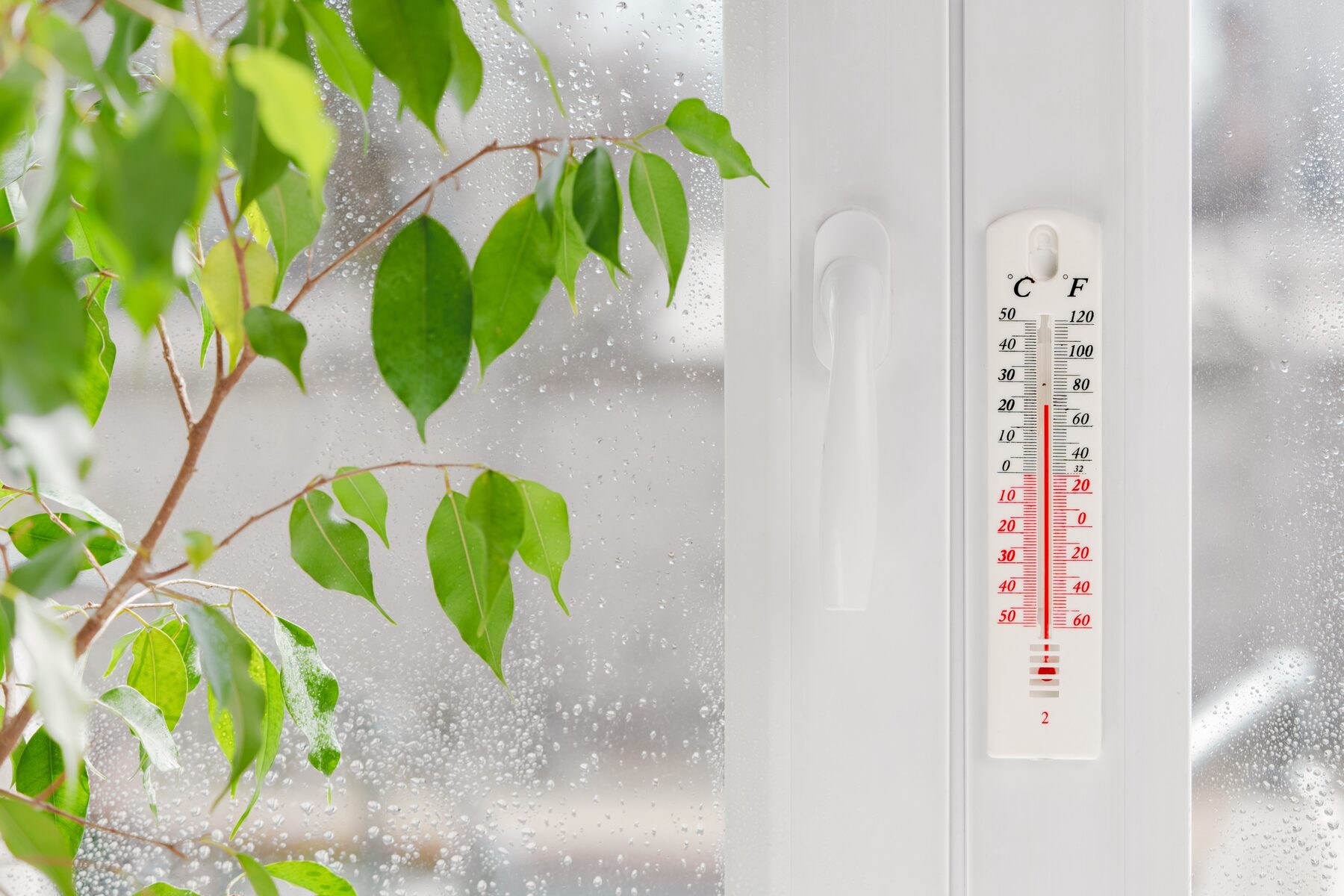
If there is water, mist or stains between the two panes of your window, and you cannot wipe them off inside or outside, the problem is no longer the humidity of your home. The double-glazed unit itself (the “insulating glass unit”) is no longer sealed. In Portuguese it is called vidro embaciado por dentro.
This guide explains how to confirm it, why it happens, whether it can be repaired, and what to ask the company, including the glass warranty.
First: where is the water?
Wipe the glass. The water can be in three places:
| Where | What it usually is | What to do |
|---|---|---|
| On the inside face, the room side | Condensation: the glass is colder than the dew point of the indoor air | Ventilate, lower the humidity. See the condensation guide and the condensation calculator |
| On the outside face | Morning dew, normal on glass that insulates well | Nothing |
| Between the two panes, and the cloth does not remove it | The cavity of the double glazing has moisture or dirt | This guide |
If the mist shows up on cold days and clears in the sun but comes back, the unit may be losing its seal: the cloth cannot reach it because it is between the panes.
Why it happens
A double-glazed unit has two panes held apart by a spacer, a bar around the edge. The spacer holds a desiccant, which removes the moisture from the air trapped in the cavity when the glass is made. The edge is closed with a primary and a secondary sealant, which keep the gas in and water vapour out (Wikipedia, “Insulated glazing”).
Over the years the sealant can fail. Damp air gets in and the desiccant fills up. Once it is full, water condenses between the panes, and the unit generally can only be fixed by replacing it (Wikipedia).
A Portuguese window company, D&S, reads it the same way: dirt or moisture inside the double glazing means the seal is damaged.
How long does double glazing last? Wikipedia gives 10 to 25 years, with manufacturer warranties of 10 to 20. That is a general guide, not a promise for your window.
What the window lost
A unit whose cavity is no longer sealed loses what makes it “double”: the dry cavity, with or without a gas such as argon, is the part that insulates. Even if you can still see through it, do not count on the insulation of day one.
Can it be repaired?
- Cleaning inside: D&S says there is no effective way to clean the inside of a double-glazed unit.
- Reinforcing the seal with silicone: the same company says it may help, but is less effective than other solutions, and that trying to repair it can make things worse.
- Drilling the glass or the spacer to vent the cavity. Wikipedia describes this method, used in other countries: it usually removes the visible condensation, but does not clean the stains inside and lowers the insulation.
- Replacing the insulating glass unit. This is what the sources give as the way to restore performance. D&S speaks of replacing the glass or the whole window.
Ask the glazier to say in writing whether only the glass needs replacing, or whether the frame and seals are also worn out. If the frame is old and you are already thinking of replacing everything, see replacing old windows.
The glass warranty
Many makers give a warranty on insulating glass. One example, the Guardian Select page (double glazing sold in Portugal):
- It lasts 10 years from the date the glass was made.
- It covers manufacturing defects visible inside the unit, as condensation or dirt in the cavity.
- It covers only the replacement of the glass unit: not the frame and not the installation.
- It is excluded if the rules for storage, handling and fitting were not followed, if the glass was the wrong type for the use, or if the unit has elements inside (such as blinds or grilles in the cavity).
- To claim, keep the glass label and the invoice and talk to the installer.
This is one brand: others have other terms. Before you buy, ask in writing for the warranty period of the glass and of the frame, who provides it (the maker or the company) and what it covers.
If you bought the glass from a company, the consumer law (Decreto-Lei 84/2021) may also apply. We could not confirm how it applies to installed windows, or the period: ask the company and, if needed, DECO or the Portal do Consumidor.
What to ask for in a quote for new windows
- The warranty on the insulating glass in writing, in years, and the maker’s label kept with the invoice.
- Insulating glass tested to EN 1279. Part 3 sets a long-term test for gas leakage (according to BSI). Ask whether the glass meets the standard.
- Fitting done to the glass rules. Poor storage, handling or fitting can void the warranty (Guardian Select example).
- Ventilation of the home: none of this solves condensation on the inside. See the calculator and the ventilation check.
Use the quote checker to see what is missing.
What I could not confirm
- The period of the legal consumer warranty for windows installed by a company.
- Prices for repairing or replacing the glass: no prices without a source. Ask a glazier for a quote.
- Whether drilling the glass (the method used abroad) is done in Portugal and with what warranty.
- The warranty periods of brands other than Guardian Select.
- Whether, in your case, only the glass needs replacing: it depends on the state of the frame.
Sources
- Wikipedia: Insulated glazing: spacer, desiccant, sealants, lifespan and repair methods.
- D&S Caixilharia: Sujidade entre os vidros das janelas duplas (in Portuguese): what it means and why cleaning does not solve it. A company source, not independent.
- Guardian Select: Garantia e normas de uso (in Portuguese): example of a 10-year warranty, exclusions and the rule to keep the label and invoice.
- BSI: EN 1279-3, long-term test for gas leakage: part 3 of the standard. Only the standard’s listing, not its text.
What to do next
- See the condensation guide for water on the inside.
- Learn what double glazing, Low-E and argon mean.
- Ask for offers with a clear warranty: questions for the installer.