PVC window installation in Lisboa
Tell us where, and companies in your area send you quotes. Measure your opening on the drawing and leave your phone number. Free, no obligation.
- Town
- Lisboa
- District
- Lisboa
- Position
- 38°44′ N · 9°09′ W
- Tilt and turn: opens to the side and tilts for fresh air.
What will it cost? Start with the sizes
Window type
Material
Colour
Sizes
Between 600 and 1800 mm
Between 300 and 2200 mm
A rough size is fine.
Extras
Window schedule
Each row is one window. Tap its mark (J1, J2…) to edit it.
No windows on the list yet. Set one up and tap “Add to the list”.
Pick a type and sizes, then add the window to the list to see the square metres.
Get quotes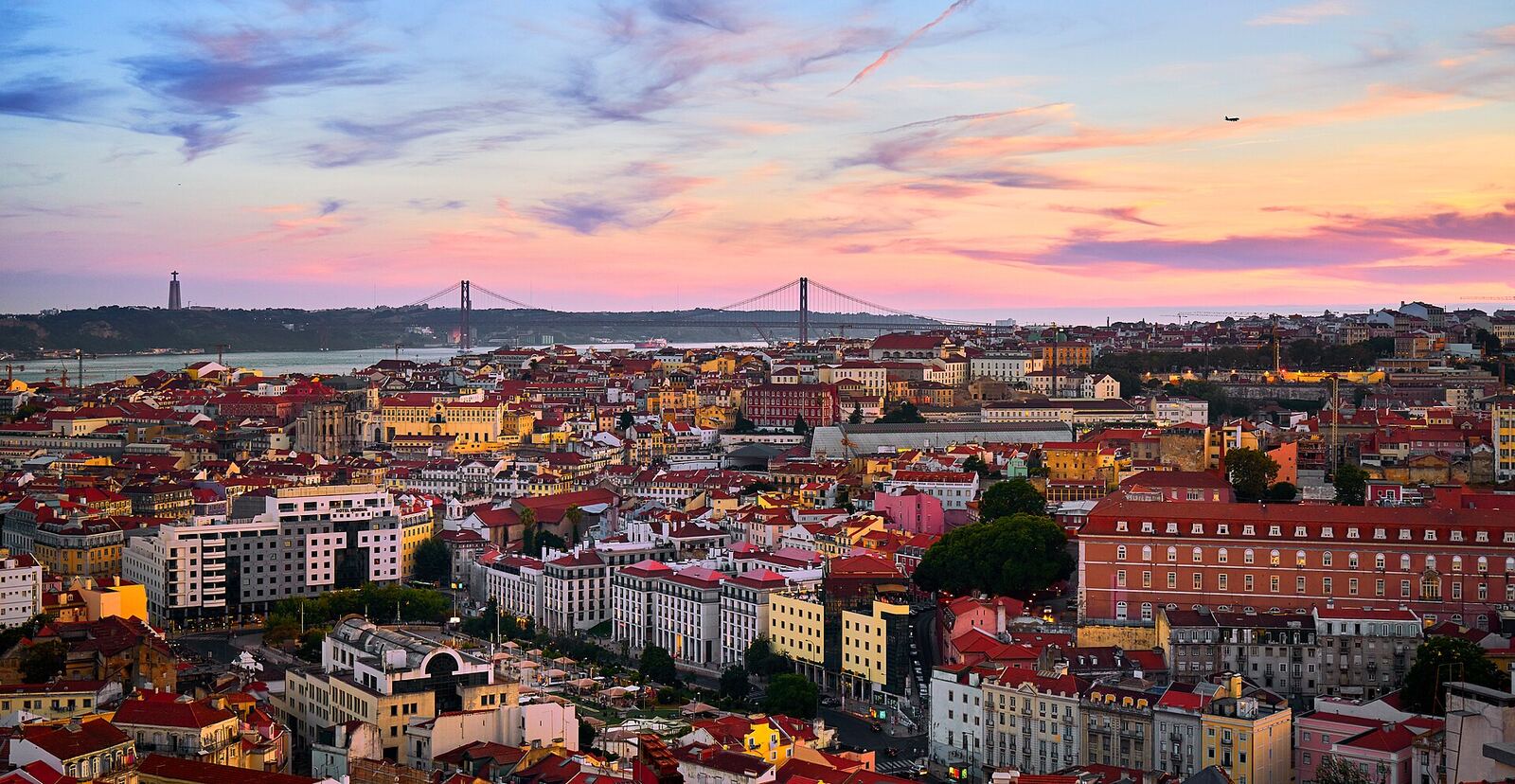
About Lisboa
Lisbon is the capital of Portugal and the westernmost capital in Europe. It lies on the right bank of the Tagus estuary, close to the Atlantic, and its highest point, at 226 metres, is in the Monsanto hills. Other towns grew around it, such as Amadora, Odivelas, Loures and Oeiras.
The historic centre sits on seven hills. Some streets are so narrow that cars cannot pass, and three funiculars and the Santa Justa lift help with the slopes. In 1755 a great earthquake destroyed almost everything. The central area was rebuilt on a grid, following the plans of the Marquis of Pombal, and is now called the Baixa Pombalina, with the Rossio and Terreiro do Paço squares.
Over the centuries the city won land from the river, mainly from the 19th century on. Those landfills gave rise to avenues, the port and new districts such as Parque das Nações and the Belém Cultural Centre. To the west lies the Monsanto Forest Park, one of the largest urban woodlands in Europe.
Across the Tagus lie Almada, Seixal and Barreiro, which grew a great deal after 1974 because they are so close to Lisbon. The result is a city of very different neighbourhoods, and each kind of home needs a window thought out in its own way.
What the climate of Lisboa asks of windows
According to Wikipedia, Lisbon has a Mediterranean climate (Csa), strongly influenced by the Gulf Stream. Spring is cool to warm, summer is hot and dry, autumn is mild and unsettled and winter is rainy and cool. Summer days can reach 35 °C. For a window, this means months of strong sun, a rainy season and a lot of air movement and traffic around the buildings.
Lisbon is a city of hills by the Tagus and near the sea. The weather is mild most of the year, but traffic, summer heat and the age of the buildings weigh heavily on windows.
The drawing shows a flat on a city street, with the river behind. Each letter marks a point: the air, the noise, the cold and the sun. See what applies to your street and your floor.
- City air and river wind
Lisbon is open to the Tagus estuary and full of hills, so the wind is felt more on the viewpoints and on the avenues by the river than in the valleys. On wide streets the air carries dust and traffic fumes that cling to the glass and come in through the gaps of old frames. A well-sealed window cuts down the air that gets into the home.
- Noise and pollution
According to Wikipedia, nitrogen dioxide is still above the legal limit, because cars are used heavily. That means avenues full of traffic and noise through the day. In the old districts, sound echoes between close walls and reaches the window louder than you would expect.
- Winter rain and cold
Winter is rainy and cool, and many buildings have old walls that chill quickly. Warm air from the home meets the cold glass and wall and leaves drops of water, which end up as mould. Changing the window helps, but only if the shutter box and the wall around it are treated too.
- Summer heat
On summer days the city gets very hot, and south- and west-facing facades take the sun for hours. On high floors, with no tree shade, the living room can stay warm into the night. Outside shutters stop the heat before it reaches the glass, and glass with a solar coating completes the job.
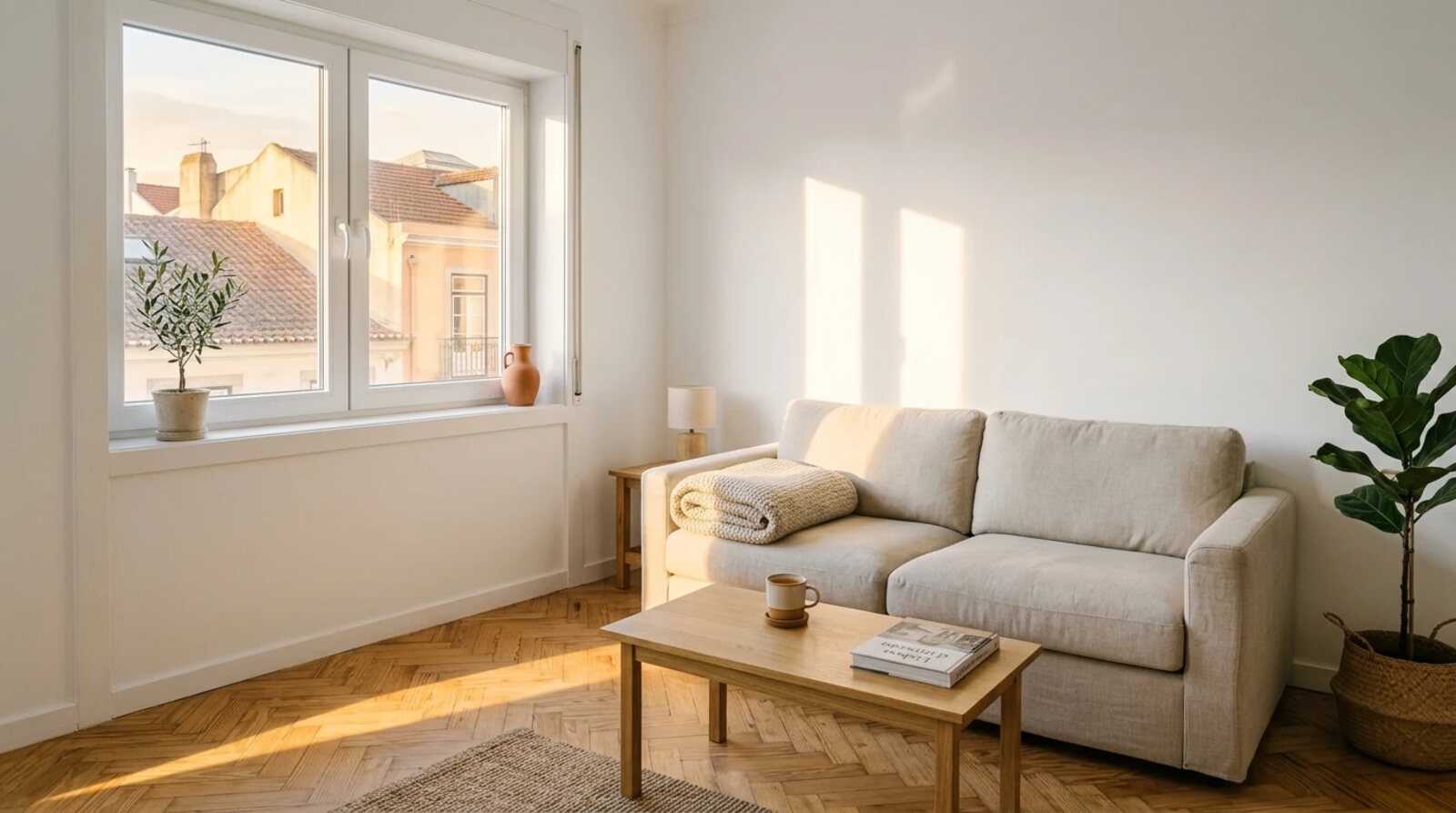
| Condition | Level | Climate sheet |
|---|---|---|
| Summer | High | Hot and dry, especially on south and west sides. |
| Winter | Medium | Cool and rainy, without extreme cold. |
| Rain | Medium | More rain in winter. |
| Wind | Medium | Felt more on the hills and by the river. |
| Sun | High | Plenty of sun, from spring to autumn. |
Levels for comparison, not measurements.
SourcesWikipédia: Lisboa
Climate zone of Lisboa
Portugal's building energy rules put every place in a winter zone (I1 to I3) and a summer zone (V1 to V3). In Lisboa the zone depends on the altitude of the building, so we show the ranges.
| Building altitude | Winter zone | Maximum Uw, W/(m²·°C) |
|---|---|---|
| up to 243 m | I1 | 2.80 |
| from 244 to 537 m | I2 | 2.40 |
| above 538 m | I3 | 2.20 |
Summer zone: V3: up to 78 m; V2: from 79 to 278 m; V1: above 279 m
Maximum solar factor of windows (gtot,máx): up to 78 m, V3: 0.10 in weak-inertia spaces and 0.50 in medium or strong inertia spaces; from 79 to 278 m, V2: 0.10 in weak-inertia spaces and 0.56 in medium or strong inertia spaces; above 279 m, V1: 0.15 in weak-inertia spaces and 0.56 in medium or strong inertia spaces. The value is for the opening with the solar protection fully activated. North-facing windows are exempt. What is the solar factor?
The maximum Uw applies to windows in housing in new and renovated buildings (Portaria n.º 138-I/2021), with exceptions, for example conservation works. The zone is calculated with the Manual SCE method, from the region (NUTS III) and the altitude, not by parish. Ask the designer or an SCE expert to confirm the one for your building. Checked on 19 October 2026. What is Uw?
Solutions table for Lisboa
| Window | Glass | |||
|---|---|---|---|---|
| Local condition | PVC | Aluminium | Double glazing | Triple glazing |
City air and river wind | SuitableGood. Good seals let in less dust and less draught. | SuitableFine, if the seals are good and well fitted. | SuitableHelps keep the outside air outside. | It dependsUseful on very exposed facades. Not always needed. |
Noise and pollution | SuitableGood seals help lower the street noise. | It dependsDepends on the seals and the thermal break. Ask. | SuitableCuts noise well. Panes of different thickness help more. | It dependsOn very noisy avenues it may pay off. Glass and seal decide. |
Winter rain and cold | SuitableGood. A well-sealed window and shutter box keep the cold out. | Needs careIn old buildings, without a thermal break, the frame gets very cold. | SuitableReduces the cold near the window and water on the glass. | It dependsUseful on north facades. Ask the installer. |
Summer heat | SuitableGood. Light colours heat up less in the sun. | It dependsDepends on colour and thermal break. Dark heats up more. | It dependsFor heat there are solar-coated glasses. Ask. | It dependsHolds heat in. On west sides, ask about a solar coating. |
- Suitable
- Needs care
- It depends
In an old building, ask the installer to check the shutter box and the wall around the window. The rest is confirmed on site.
Homes in Lisboa
The homes in the area change what is worth asking of the windows.
Historic centre
The historic quarters, with narrow streets and hills, have old buildings with thick walls and framed windows. A new window has to fit an opening that is many decades old, and the area may have facade protection rules. Before asking for quotes, ask Lisbon city council what applies to your building.
Older apartment blocks
In many apartment blocks the shutter box sits inside the wall, above the window. If it is old, it lets in cold air and noise even with a new window. So the quote should say clearly what is done to the box and to the wall finish.
New apartments
In the areas won from the river, such as Parque das Nações, the buildings are more recent. The openings there can be larger and face the river and the sun, so the seals, the glass and the protection against heat matter most.
Local notes
On avenues and near busy roads, noise is felt mostly at rush hour. Good seals and double glazing help lower it.
How it works
Tell us what you need
Measure the opening on the drawing and confirm your town.
We pass your request to the right companies
We process your request and send it to the local companies that best fit your town and what you asked for.
The companies contact you with quotes
They get in touch and send you their quotes and offers. Compare them and choose, with no obligation.
We do not make or fit windows. We pass your request on and explain.
Towns near Lisboa
Do not live right in Lisbon? These are the neighbouring municipalities and a few across the river.
Cannot find your area? Write it in the request.
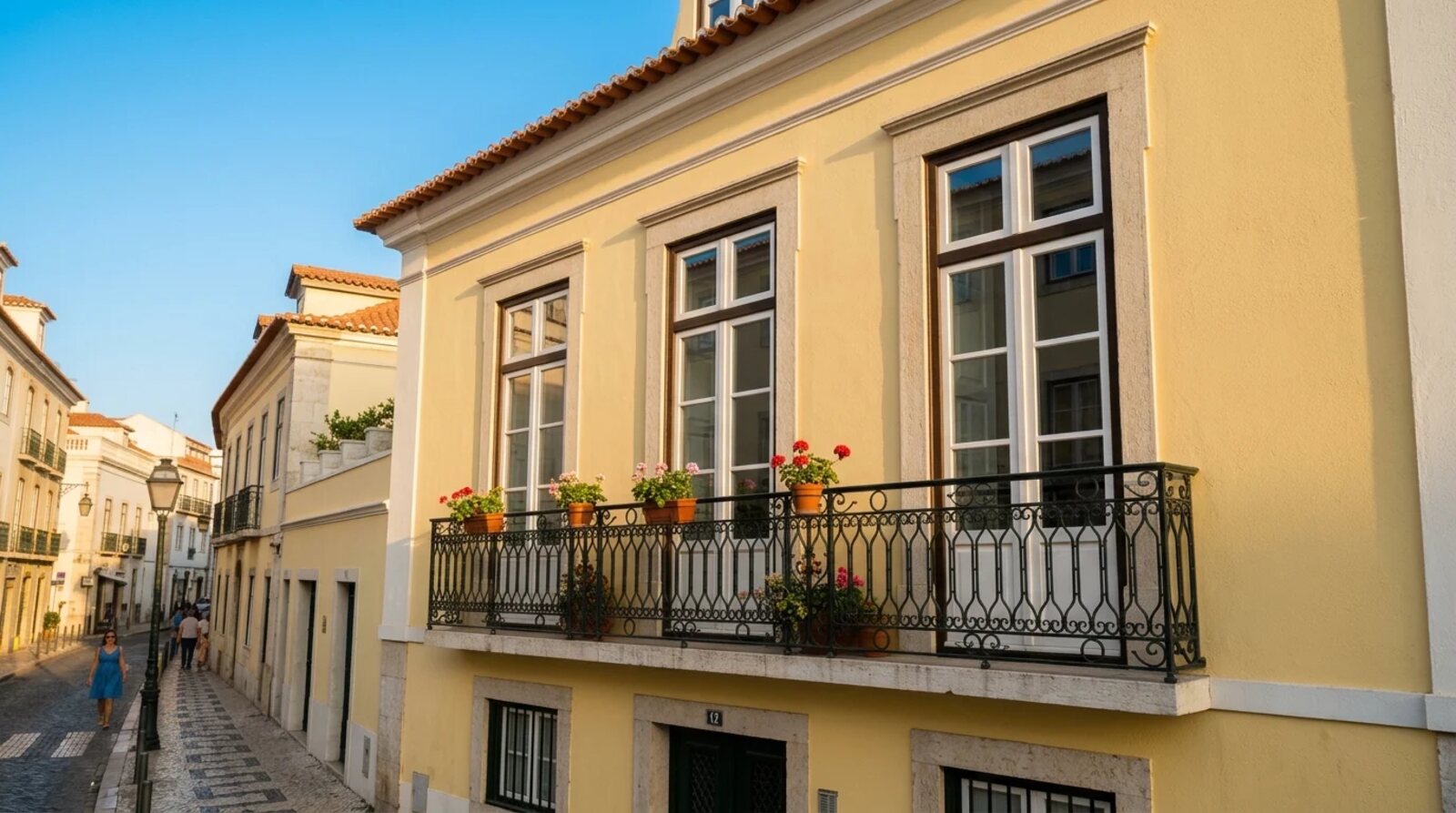
Narrow streets and hills: how the job arrives
According to Wikipedia, some streets in the historic centre are too narrow for cars to pass. For a window job that matters: carrying the frames, taking them up the stairs and fitting a goods lift can be harder than in a newer district. Tell the installer what access to your building is like, whether there is a lift and whether the street allows parking. That way the date of the job and the site visit are agreed with fewer surprises. If the building has no lift, ask how many floors the installer has to climb with the frames and whether the old window leaves by the same route.
The Baixa Pombalina and the 1755 earthquake
After the 1755 earthquake, the Baixa was rebuilt on a grid, with buildings of uniform facade. Anyone living in that area, or in a building of historic interest, should expect facade rules and a conversation with the administration. Openings in buildings like these can have proportions of their own, so the installer should measure each one instead of assuming they are all alike. Ask for a written proposal that says what stays visible from outside. If your building is on one of those streets, it makes sense to start by asking the administration and the council, before spending time on proposals.
General notes
In many cases you can, but not always without rules. In historic or protected areas, Lisbon city council may ask for the facade to keep its design. In buildings with a residents' association, it is usually the administration that decides the colour and type of window. Ask first and only then request quotes.
A well-sealed window cuts part of the noise, and double glazing helps more than single. Panes of two different thicknesses damp certain sounds better. But noise also comes in through the shutter box and the cracks around the frame. Ask the installer to look at all of that, and not only at the glass.
Not always. Winter is cool and rainy, but without very hard cold, and good double glazing, well installed, suits many homes. Triple is heavier and costs more, so it can pay off on a cold facade or a very noisy street. Ask the installer for an opinion for your floor and your orientation.
Glass helps, but the best thing is to stop the sun before it reaches the window. Outside shutters or blinds do that. There is also glass with a solar coating, which lets light in and holds back part of the heat. A light colour on the frame heats up less than a dark one.
It helps, because a window that insulates better leaves the inner glass less cold. But the water comes from the damp air in the home, so airing every day is needed, even in the cold. If the wall around the window is also cold, the problem can continue.
Yes. Write your town in the request. JanelaCerta does not install windows: it passes the request to installers in your area. If your home is near the river, say so, because damp estuary air also counts in the choice.
Related guides
- Grant to replace windows in Cascais: Green Fund (70% to 100%)The Cascais Green Fund pays between 70% and 100% of windows, up to €3,000, depending on the IRS bracket. What the Regulation says and what is still unknown.6 min
- Energy-efficiency loan (BPF): who can apply, and for windowsPortaria 442-A/2025/1 creates a loan, not a gift, with class A windows on the list. Who can apply, the certificate required and what is still unknown.5 min
- Vale Eficiência and windows: what happened and what to do in 2026The Vale Eficiência has ended, but the Government announced a new model for about 28,000 families with no voucher. How it worked, the timeline and what to do in each case.6 min
- Independent help before buying windows: Espaço Energia, casA+ and SCE expertsThree ADENE-linked services that can help before you talk to salespeople: what each one offers, and what their pages do not say.4 min
Prefer to get quotes?
Leave your name and phone number. Your town is already filled in. Free, no obligation.
Do you install windows in Lisboa?
Receive requests from customers in your area.
I want to be a partner