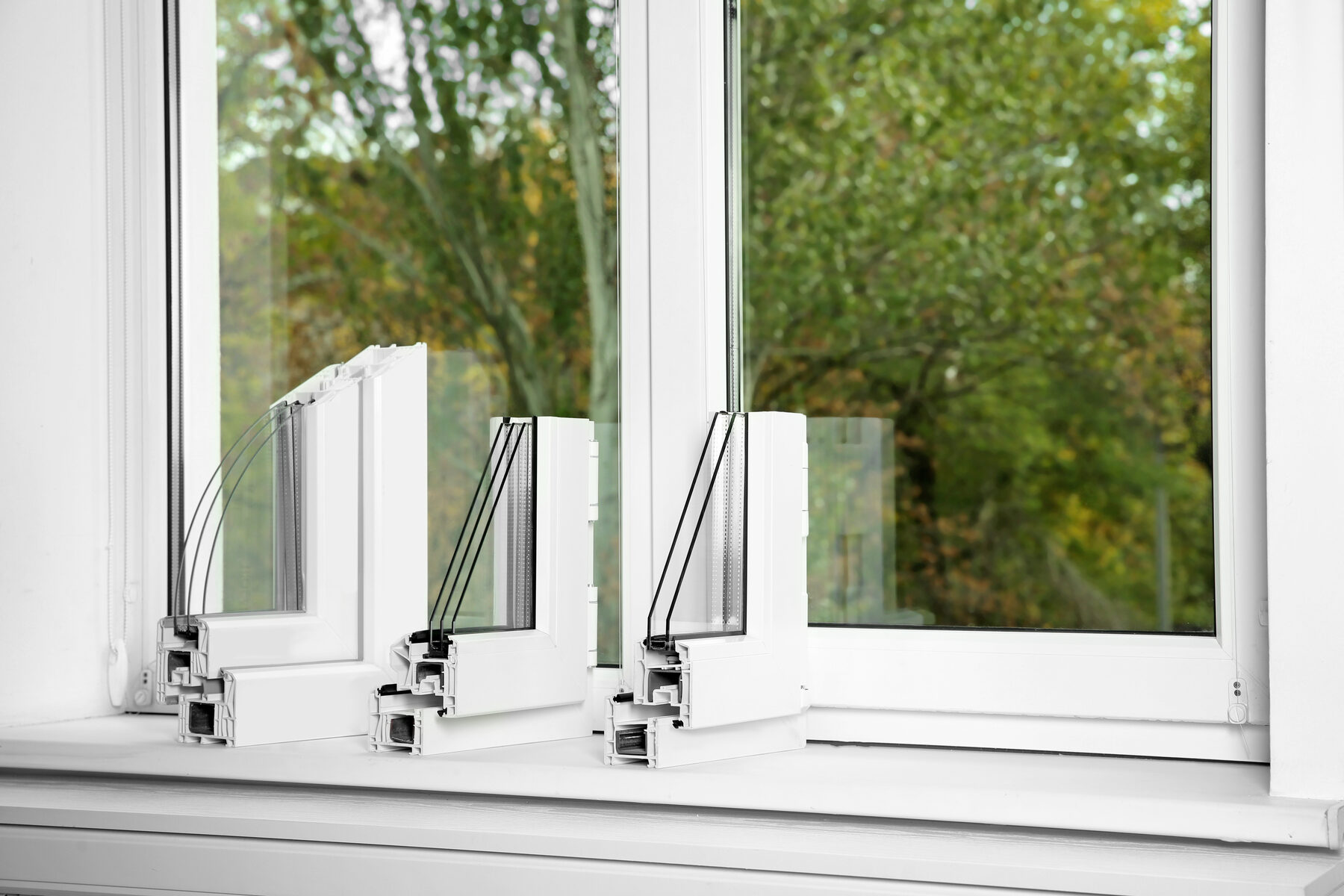
You want to change your windows and you hear two answers: “PVC” and “aluminium”. Each salesperson defends their own. In the PVC vs aluminium comparison, both work. What changes is what your home needs, where you live and how much glass (and how little frame) you want to see.
This guide explains the difference without hard words. At the end you get simple questions to ask whoever is selling to you.
Cold and heat: the biggest difference
PVC is a rigid plastic. It does not pass heat well. So the frame stays less cold in winter and less cold travels through it.
Aluminium is a metal. It passes heat and cold very well. Unprotected, the frame feels icy to the touch and the cold comes in through the profile itself.
There is aluminium with a thermal break: a plastic piece in the middle of the profile that cuts that path. It improves things a lot. So the right question is not “aluminium or PVC”, but “does this aluminium window have a thermal break?”. The quality of that break varies from model to model. Ask for the manufacturer’s data sheet.
Example: in a bedroom where the frame feels cold in the morning, the cause is usually a profile with no thermal break or a badly sealed window. If the glass has water on the inside, see Window condensation.
Quick table
| PVC | Aluminium | |
|---|---|---|
| Cold and heat | Insulates well by nature | Needs a thermal break |
| Looks | Wider profiles | Slimmer profiles, more glass on show |
| Large windows | Good for the most common sizes | Handles large openings with a slim profile |
| Cleaning | Water and soap | Water and soap |
| Near the sea | Does not rust | Needs a good finish and regular cleaning |
| Colours | Several, but fewer choices on the simplest models | Many colours and finishes |
Looks and large openings
Aluminium is very strong. That is why it can use slim profiles, even on glass doors and large windows. If you want a lot of glass and little frame, that is a point in its favour.
PVC has wider profiles, because it needs chambers inside and, in many cases, a steel reinforcement. In return, for the most common sizes in a home (a bedroom, a living room, a kitchen) it does the job very well.
Example: a three-metre balcony door with glass from end to end looks more elegant in aluminium. A bedroom window of 120 by 140 centimetres looks great in either.
What changes day to day
Cleaning. For both materials, water and mild soap are enough. Avoid hard scourers and strong products, which scratch or damage the finish.
Scratches and marks. A deep scratch on PVC is hard to hide. On lacquered aluminium some touching up is possible, but it depends on the finish. Ask the manufacturer.
Heat from the sun. Materials expand with heat. In dark colours, in strong sun, the profile gets hotter. Good systems are designed for this, but check that the colour you want is covered by the warranty for your situation.
Hardware. Hinges, locks and handles matter as much as the profile. A window that “warps” or is hard to close usually has a problem with the hardware or the installation, not only the material. See Opening types.
Noise and durability
Street noise depends mostly on the glass and the sealing, more than on the profile material. If noise is your problem, talk about the glass with the installer. See Sound insulation for windows.
As for lifespan, both materials can last many years if they are well made, well installed and well looked after. Do not trust anyone who promises “for life”. Ask for the warranty in writing and see what it covers. See Warranties and certificates.
Near the sea
Salt and humidity attack metals. PVC does not rust, which helps near the coast. Aluminium can also hold up well, but it depends on the finish and on the steel parts (screws and hardware).
In places like Peniche, with wind and salt, ask what finish the aluminium has and what hardware it uses. Rinse the profile with fresh water now and then.
Price
We give no figures here, because they vary a lot with the model, the brand, the glass and the size. One material is not always cheaper than the other. For an idea of the factors, see How much do PVC windows cost.
What you can do: ask for two quotes for the same window, one in each material, with the same glass. Only then is the comparison fair.
Installation counts as much as the material
A good window, badly installed, lets in air and water. A simple window, well installed, works better. Check that the quote mentions:
- sealing around the window, between the frame and the wall
- finishing of the wall inside and outside
- removal of the old window and the rubble
- sill and shutter box
See also PVC window installation.
Common mistakes when choosing
- Comparing prices with different glass. A quote with plain glass and another with better glass cannot be compared.
- Forgetting the thermal break on aluminium. This is the most common mistake.
- Choosing only by looks. A pretty window that lets the cold in gets tiring fast.
- Ignoring the installation. The material is only one part.
- Not asking for the data sheet. Without it, promises are worth little.
Mini-glossary
- Frame: the window’s border, which holds the glass.
- Profile: the long piece the frame is made of.
- Thermal break: a plastic piece inside aluminium that stops the cold.
- Opening: the hole in the wall where the window sits.
- Hardware: hinges, locks and handles.
How to decide
- You want a warmer home and a simple choice: PVC is usually the answer.
- You want a large opening, lots of glass and thin lines: aluminium with a thermal break makes sense.
- You live by the sea: either works, as long as the finish and the hardware can take the salt.
In short: there is no “best” material for everyone. There is the right material for your home and a well-done installation.
What to do next
- Compare the glass too: Double or triple glazing.
- Measure your windows: How to measure windows.
- Prepare your request: How to ask for a quote and the questions for the installer.
- For a rough idea, use the calculator and ask an installer in your area to confirm on site.