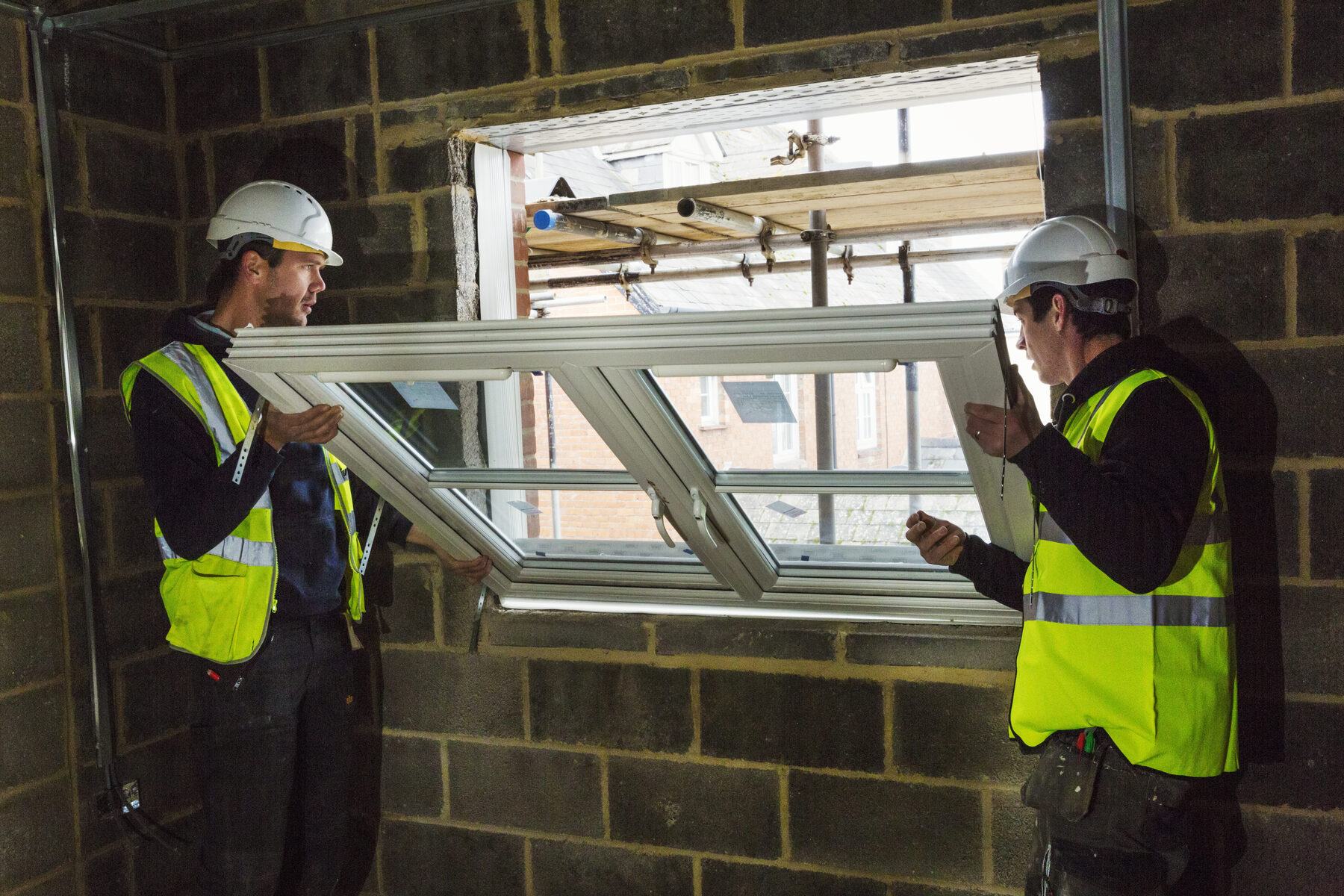
A very good window, badly installed, lets in cold, noise and water. The window is only half of the job. The other half is how it connects to the wall. And it is the half nobody sees once the work is finished.
Why installation matters so much
The window becomes part of the wall. If there are gaps between the frame and the opening (the hole in the wall), air comes in, heat leaves and sound takes the same path. Many people change their windows, still feel cold and decide the glass was bad. Very often the problem is the seal around the frame.
Example: in an old flat with warped wooden windows, the owner replaces everything with PVC and double glazing. In the first winter there is still a draught at the top corner. The glass is fine. What failed was the gap between frame and wall, which was filled with just a little foam.
How it should be done, step by step
- Correct measuring: the opening is measured on site, at several points, because walls are rarely straight. See how to measure windows.
- Old window removed and the opening cleaned and checked. If there is damp, crumbling corners or rust, it is dealt with first.
- Mechanical fixing: the window is fixed to the wall with plugs and screws at the right points, not just with foam.
- Level and plumb: if it is crooked, the sash works under strain and ends up rubbing.
- Sealing around it: polyurethane foam helps, but should not be the only protection. The general idea is a barrier on the inside (against air and moisture from the home), insulation in the middle and a barrier on the outside (against rain and wind). Sealing tape and sealant are normally used.
- Finishing details: sill, threshold and trims arranged so rainwater runs out and not into the wall.
- Final adjustment: the sash opens and closes without force and sits well against the seals. The installer shows how to use it.
Fitting over the old frame or full removal?
| Over the old frame | Full removal | |
|---|---|---|
| Speed | Faster | Slower |
| Mess and building work | Little | More dust and wall repairs |
| Glass area | Loses a little | Uses the whole opening |
| When it suits | Old frame in good condition | Rotten, crooked or damp frame |
Fitting over the old frame is practical, but only makes sense if the old frame is sound and straight. Ask the installer why they recommend one or the other. The choice may also depend on whether the wall or the building has facade rules.
Ventilation: the other side of the coin
New windows seal much better than old ones. That is good for cold and noise, but the air inside no longer renews itself. Cooking, showering and sleeping produce moisture. Without airing, you get water on the glass and mould in the corners.
So after installation:
- open the windows for a few minutes a day, preferably to create a cross-draught;
- use the tilt position if the window is tilt-and-turn (see opening types);
- check whether there are vents or another way of ventilating in damp rooms.
Most common mistakes
- Only foam, with no fixing or sealant.
- Frame not level or out of square.
- Gaps in the corners and at the top.
- No sealing on the outside, where the rain hits.
- Roller shutter box with no insulation, letting in air and noise.
- Work finished without adjusting the hardware.
- Window installed on a day of heavy rain, with a wet opening.
These mistakes bring draughts, more noise, damp and a window that rubs or closes badly.
How to check for yourself that it was done well
- Hand test: close the window and run a hand around it on a windy day. You should feel no air.
- Sash test: open and close it several times. It should turn without effort and close with an even pressure.
- Light test: at night, with the light on inside and the window closed, look from outside for threads of light in the corners, or check that the sash sits well.
- Visual test: no gaps are visible around the frame, inside or outside, and the outside finish is sealed.
- Paper test: trap a strip of paper in the seal and close the window. If it slides out without resistance, the pressure is weak at that point.
- Water test: after the first heavy rain, look for water stains on the sill or in the corners.
If anything fails, call the company back. A new, well-installed window should have no draughts.
Mini glossary
- Opening: the hole in the wall where the window fits.
- Frame: the fixed part of the window, attached to the opening.
- Airtightness (watertightness): the ability not to let air and water through. A tight window has no leaks.
- Sealant: a flexible paste that seals a joint and resists rain and sun.
- Thermal bridge: a spot where heat passes faster, for example a poorly insulated corner. It is where mould usually forms.
What to do next
- Before hiring, read how to ask for a quote and ask for the fixing and sealing method to be written down. See also the checklist before hiring.
- Confirm the installation warranty, separate from the window warranty: warranties and certificates.
- Want to see how these issues apply to a town? See the example of Peniche, where wind and salt call for extra attention.