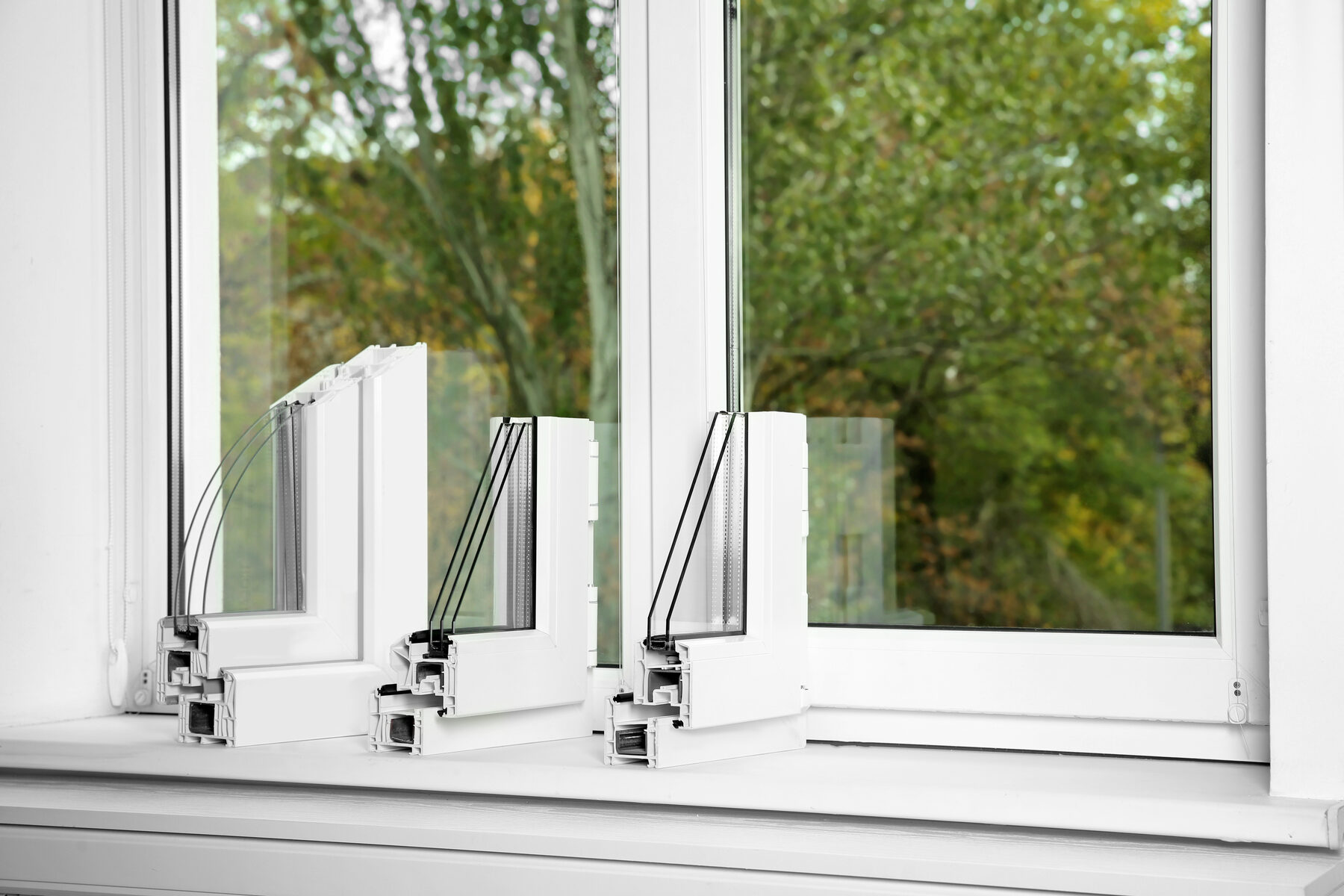
PVC windows are windows whose structure (the profile) is made of rigid plastic, with air chambers inside and, usually, a steel reinforcement on larger pieces. They are widely used in Portugal because they insulate well, need little maintenance and neither rust nor rot. This page is the starting point: it explains the essentials and tells you in what order to read the rest.
What they are, in a few words
A window is a set of parts: the profile (the frame and the sash), the glass, the rubber seals, the hardware (hinges and lock) and the installation in the wall. PVC is only the material of the profile. So “PVC window” does not, by itself, say whether the window is good. Two quotes for “PVC with double glazing” can be very different, and the difference lies in what the quote does not write down.
Who they suit
They suit almost every home.
- An old flat with wooden windows or single glazing: this is where the comfort difference is most noticeable. Less cold next to the window, less noise and fewer draughts.
- A house near the sea or with lots of sun: PVC does not rust and needs no painting, but a good-quality profile and a good installation are worth it.
- Buildings with facade rules or very large windows: check with the building’s management and the installer before deciding.
Advantages and limits, without exaggeration
| Advantages | Limits |
|---|---|
| Insulates well from cold and noise, if the whole package is good | The result depends on the whole package, not just the material |
| Low maintenance: clean with a damp cloth | Cheap profiles or ones of unknown origin may turn yellow |
| Does not rust or rot | Very large windows may need reinforcement and a stiffer profile |
| Many opening types available | Dark or strongly coloured finishes need checking with the manufacturer |
PVC is not the right choice for everything. To see when aluminium makes more sense, read PVC or aluminium.
How to choose: the four things that count
- The profile: brand, system and class tell you whether the window will keep its shape for years.
- The glass: double glazing is the starting point in many homes. Triple or acoustic glass is justified in specific cases.
- The opening: how it opens affects space, ventilation and sealing.
- The installation: an excellent window, badly installed, lets in cold, noise and water.
If you have just one question to take to the installer, make it this one: “Can you write the profile brand, the glass type and how it is fixed and sealed into the quote?”
In what order to read
If you are thinking of replacing windows, this order helps:
- Understand the package: profile classes and opening types.
- Understand what you want from the window: thermal insulation (cold and heat) and sound insulation (noise).
- Understand the work: PVC window installation.
- Talk about money: what drives the price and how to ask for a quote.
Just want a cost idea? Use the calculator. If your worry is damp or water on the glass, go straight to water on windows.
The guides in this topic
Each page below deals with one concrete question: profile class, installation, noise, cold and heat, and how the window opens.