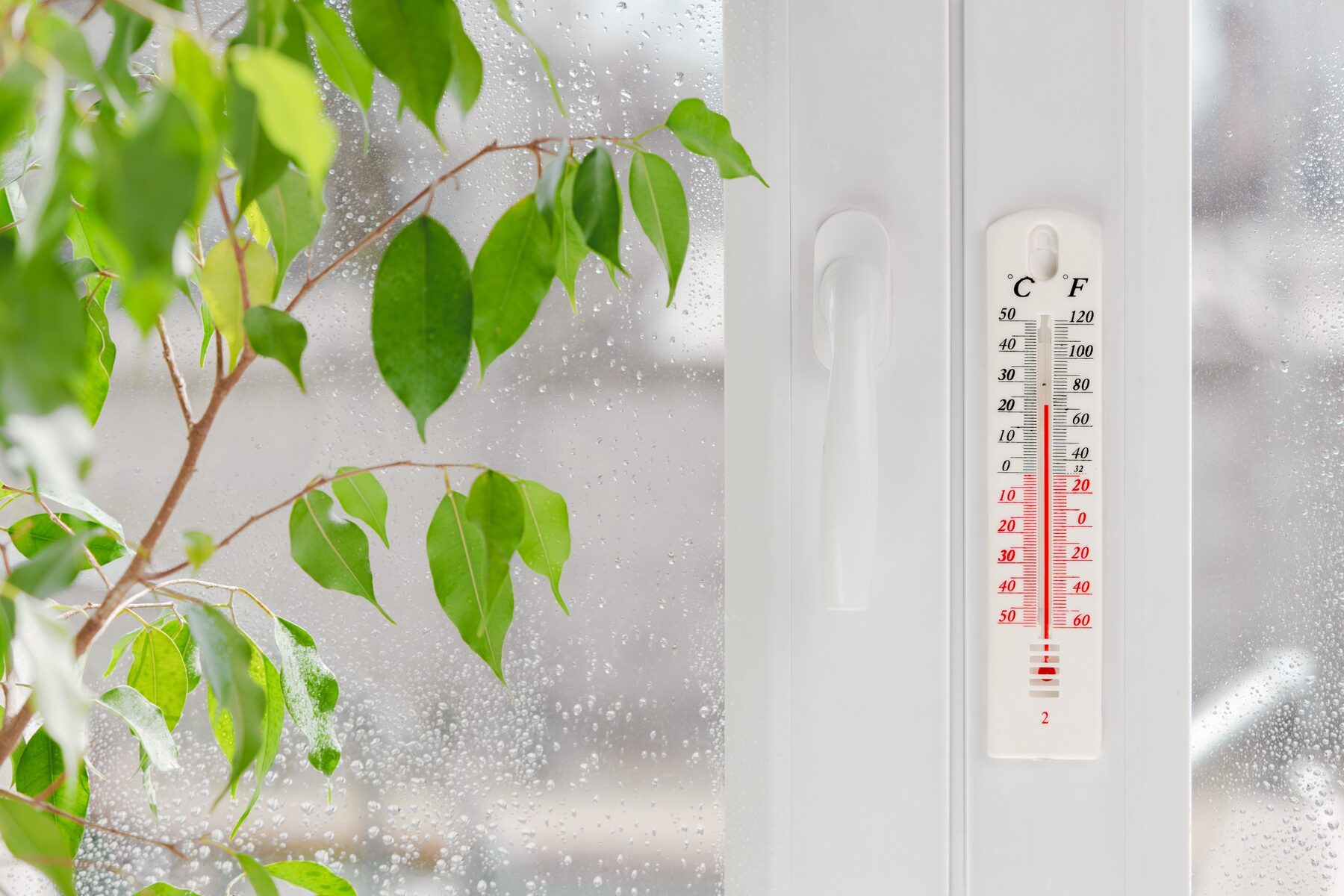
You wake up and the window is wet on the inside. This is called condensation, and some people say the window is “sweating”. It is alarming, but it almost always has a simple explanation. In this guide you will see why it appears, the difference between condensation inside, outside and between double panes, and what you can do today.
Why it appears
The air in your home carries water vapour, which you cannot see. When that warm, humid air touches cold glass, the vapour turns into drops. It is the same thing that happens on a glass of cold water in summer.
So water on the glass always has two parts: too much humidity in the air and a cold surface. Fixing one of them, or both, is enough to reduce the drops. Water on the glass is not a sign that the window is bad. Often it is a sign that the home is too closed up, or that the glass is very cold.
Where the humidity comes from
Inside the home, we make humidity ourselves:
- by breathing and sleeping (especially in a closed bedroom);
- by showering and cooking;
- by drying clothes indoors;
- with gas or paraffin heaters, which release water vapour.
Example: the bedroom is closed at night, two people sleep there and in the morning the glass is covered in drops. The humidity had nowhere to go.
Condensation on the inside or outside of the glass
Before doing anything, look carefully at where the drops are. Wipe with a cloth and see whether the water comes off.
| Where the water is | What it usually is | What to do |
|---|---|---|
| Inside, on the home side of the glass | Too much humidity and cold glass. The most common case | Air the home, control humidity |
| Outside, early in the morning | The outer pane is cold, a sign that heat is not escaping the home. It usually goes away on its own | Normally nothing |
| Between the two panes | The seal of the double unit has failed | Talk to whoever installed it |
| In the corners and the frame | Cold bridges, sealing or trapped humidity | Air the home and check the installation |
If the cloth removes the water, it is on the home side. If not, it is on the other side or between the panes.
Condensation between double panes
In double glazing, the space between the two panes (the cavity) should be sealed and dry. If drops, mist or stains appear between the panes, it means the seal of the unit has failed and humidity got in from outside. This cannot be wiped off from the inside, nor fixed by airing.
What to do:
- Take photos, in the morning and the afternoon, and note the date.
- Check whether the window is still under warranty and talk to whoever installed it or the manufacturer. See warranties and certificates.
- The fix is usually to replace the glass unit (only the glass), not the whole window. Ask for a quote for the glass only.
Until you fix it, the window keeps working, but it insulates worse and the glass may stay permanently misted.
What you can do today
- Open the windows for a few minutes every day, even in winter. It is better to open wide for a short time than to leave a small gap all day.
- In the morning, open windows on opposite sides of the home for a few minutes. The draught renews the air quickly.
- In the bathroom and the kitchen, use the extractor or open the window during and after showering or cooking.
- Put lids on pans when cooking and avoid drying clothes indoors without airing.
- Keep the home at a steady temperature. Sudden changes help drops form.
- Move furniture and very thick curtains away from the windows. Air has to circulate next to the glass.
- Wipe the water with a cloth. If it stays, mould can appear in the corners.
Condensation or a leak? Watertightness
Not all water on a window is condensation. Watertightness is the ability of a window not to let rainwater in. If the water appears only with rain and wind, and at the bottom of the window or in the corner, it may be a sealing or drainage fault, not condensation. Condensation comes from inside the home and shows up on cold mornings, even without rain. If in doubt, see window problems and tell the installer when the water appears.
How to check for yourself
- Hygrometer: a small, cheap device that shows the humidity of the air. If the values stay very high for days on end, the home needs more ventilation.
- Time test: if the drops only appear in the morning and disappear during the day, it is humidity from the night. If they stay all the time, the home has too much humidity or there is another cause.
New windows and ventilation
A new, well-sealed window lets less air through. That saves energy, but it also traps humidity. Old homes “breathed” through the gaps. New windows do not.
So after changing windows, it is even more important to air the home, or to have a ventilation grille or an opening position made for it. On tilt-and-turn windows, the tilted position is for airing. See opening types.
Better glass (such as double or triple) keeps the inside pane less cold, and there are fewer drops. But airing is still needed. And good installation prevents cold and humidity in the corners of the window. See PVC window installation.
Common mistakes
- Leaving the window open a small gap all day. It cools the home and the glass.
- Covering ventilation grilles because “cold comes in”. They exist so that the home can breathe.
- Blaming the new window. Often the home simply has fewer air inlets now.
- Drying clothes in a closed bedroom. It is one of the biggest causes.
- Ignoring small patches of mould. It grows slowly and then is hard to clean.
When to call a professional
- The water is between the two panes.
- Condensation appears even with the home well aired and changes little.
- Mould comes back after cleaning, or walls are wet next to the window.
- The window has visible gaps or lets air through.
Describe to the installer where and when the water appears, and send a photo.
Mini-glossary
- Condensation: water vapour in the air turning into drops when it touches a cold surface.
- Ventilation: renewing the air in the home, by opening windows or with grilles and extractors.
- Thermal bridge: a spot of the wall or window that is colder than the rest.
- Mould: dark stains that grow where there is humidity.
- Watertightness: the window does not let rainwater in.
In short: water on the glass is too much humidity meeting cold glass. Airing every day solves most cases. If the water is between the two panes, call the installer.
What to do next
- See double or triple glazing, because a less cold inside pane helps.
- See the overview of all window problems.
- If you are going to replace your windows, see how to ask for a quote and ask about ventilation.
- For the home as a whole, see energy efficiency.